Representatives of the GMN Phase II port-call data-sharing Pilot Project visited Walvis Bay, Namibia, from 19 to 21 October 2026, for an on-site mission combining technical meetings, practical demonstrations and knowledge-sharing activities aimed at supporting more efficient and sustainable port operations.
Hosted by the Namibian Ports Authority (Namport), the visit brought together project partners Prodevelop and CENIT–CIMNE with local port stakeholders to advance a port-call data-sharing demonstration at Namibia’s ports of Walvis Bay and Lüderitz.
The initiative forms part of the Global Maritime Technology Cooperation Centre’s Network Phase II (GMN II) Project, implemented by the International Maritime Organization and funded by the European Union.
The pilot is exploring how improved information sharing and coordination between port stakeholders can enhance operational efficiency and contribute to maritime decarbonisation.
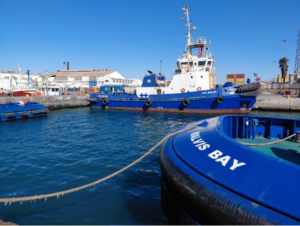
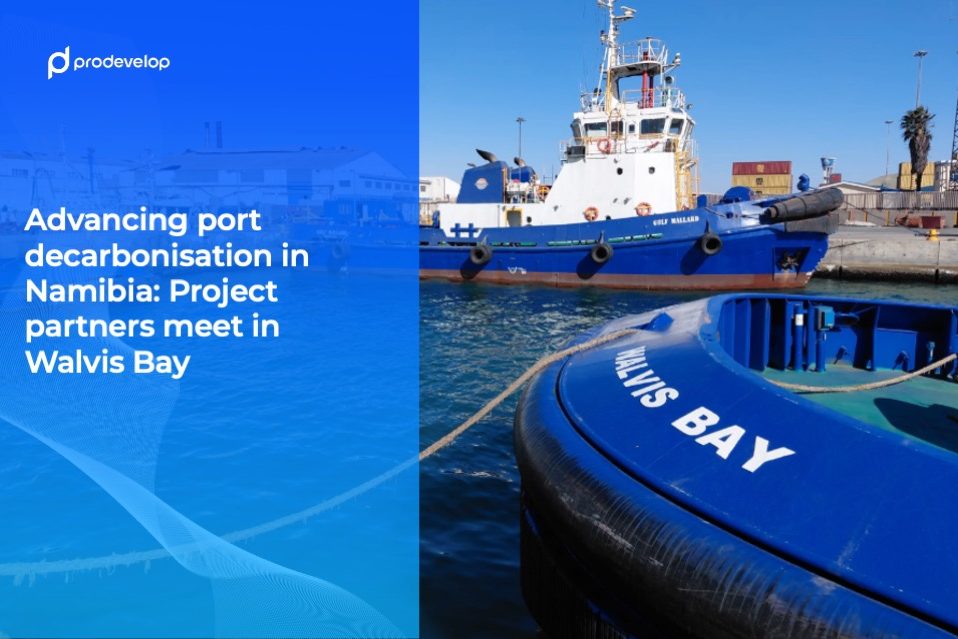
Pilot boats at the Port of Walvis Bay, Namibia, where the IMO GMN Phase II port-call data-sharing demonstration is being implemented.
Understanding port operations on the ground
The visit marked an important milestone in the project’s implementation, providing an opportunity to engage directly with the organisations involved in day-to-day port operations and better understand their processes, information needs and opportunities for improved coordination.
Activities began with participation in Namport’s regular Game Plan meeting, where shipping agents and port operators coordinate vessel arrivals, berth allocations and planned departures. The project team introduced the pilot and demonstrated how the Posidonia Operations platform could support the management and sharing of port-call information.
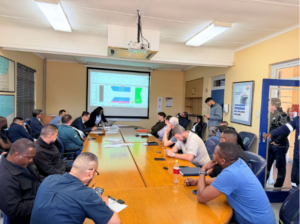
Prodevelop presents the port-call management platform to Namport staff and shipping agents during a working session in Walvis Bay.
The visit also included working sessions with Namport’s Port Control, Operations and IT teams, alongside visits to the Walvis Bay Multipurpose Terminal and Terminal Investment Namibia (TiN). Discussions with nautical service providers, including pilots, tug operators and mooring teams, offered further insight into the coordination required for vessel arrivals and departures.
These exchanges helped identify opportunities to improve information sharing and integrate digital tools into existing operational processes. Local stakeholders showed interest in the proposed platform, providing an encouraging basis for continued collaboration and training.
Led by Prodevelop in close cooperation with Namport and local stakeholders, the technical activities are helping adapt the solution to the operational realities of Namibia’s ports.
Eduardo Garro — Prodevelop
“Visiting Walvis Bay and meeting directly with port operators gave us valuable insight into how port calls are managed in practice. These exchanges are essential to ensuring that the digital platform responds to the needs of the local port community and can be effectively integrated into day-to-day operations.”
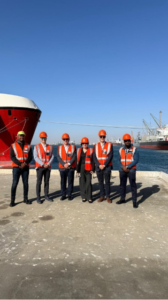
Project representatives during a site visit to the quay at the Port of Walvis Bay on 19 October 2026.
Building the evidence for more sustainable port calls
Alongside the technical implementation, the project is establishing a framework to assess the potential operational and environmental benefits of improved port-call coordination.
During the visit, CENIT–CIMNE held a technical workshop on greenhouse gas (GHG) emissions assessment. Led by CENIT Director Sergi Saurí, the session introduced the activity-based methodology that will be used to estimate emissions from individual vessels and port calls. This approach considers factors such as engine characteristics and the time vessels spend in different operational phases, including cruising, manoeuvring and time at berth.
The workshop also addressed the use of historical port-call data and performance indicators to establish an emissions baseline against which future changes can be assessed.
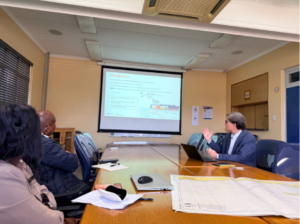
CENIT–CIMNE Director Sergi Saurí leads a technical workshop on greenhouse gas emissions assessment in Walvis Bay on 21 October 2026.
By combining digital technology with scientific evaluation, the pilot aims to generate practical evidence on how improved port-call coordination may contribute to greater operational efficiency and lower emissions, while accounting for the specific conditions of Namibia’s ports.
Sharing international experience on port decarbonisation
The visit also provided an opportunity to connect the pilot with wider international experience through a knowledge-sharing seminar on port decarbonisation, bringing together representatives of Namport’s executive board, Ministry of Environment, Forestry and Tourism (MEFT), local research institutions and other stakeholders.
The seminar opened with a contribution from Sukhjit Singh of the IMO, who joined online to introduce the organisation’s approach to maritime decarbonisation and the wider GMN programme.
CENIT–CIMNE Director Sergi Saurí delivered a presentation entitled “Port Decarbonisation in Practice: Lessons for Namibia from International Projects,” sharing experience from international initiatives and discussing its relevance to Namibia’s ports. Prodevelop also contributed by presenting the ongoing pilot and its approach to improving port-call coordination through digital technology.
The seminar created an opportunity for dialogue on how international experience, scientific research and practical technological solutions can support the transition towards more sustainable port operations, while responding to local needs.
Sergi Saurí — Director, CENIT–CIMNE
“International experience offers valuable lessons for port decarbonisation, but solutions need to be adapted to local conditions. The discussions in Walvis Bay provided an important opportunity to exchange knowledge and explore how research, technology and operational experience can contribute to more efficient and sustainable port operations in Namibia.”
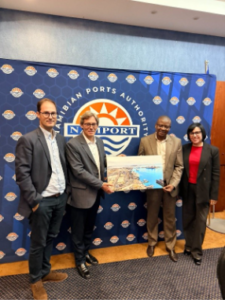
Project representatives with members of Namport’s executive board during the port decarbonisation seminar in Walvis Bay on 21 October 2026.
Moving forward with the demonstration
The Walvis Bay visit successfully completed an important on-site milestone, strengthening engagement with the local port community and supporting preparations for the operational demonstration.
The next stages will focus on the continued deployment and use of the Posidonia Operations platform, stakeholder training and the assessment of its operational and environmental performance at Walvis Bay and Lüderitz.
Beyond the technology itself, the demonstration seeks to generate lessons about the practical requirements for introducing digital port-call solutions, including collaboration between organisations, data sharing and adapting technologies to local operating conditions.
The experience gained in Namibia will contribute to the wider IMO GMN Phase II programme, supporting knowledge exchange and informing future approaches to more efficient and sustainable port operations.
The project partners thank Namport and all participating port stakeholders for their collaboration and engagement throughout the visit.